Pastoralism as a Viable Economic System, not a Last Resort

In March of the International Year of Rangelands and Pastoralists, pastoralism is reframed through the lens of livelihoods and economics, revealing its scale, hidden value, and the urgent need for greater investment in rangelands.
In Tunisia, an estimated 15,000 tons of camel milk are produced each year. Official records barely capture 1,000 tons. The rest circulates through informal markets along pastoral routes. Despite the efficiency of these systems, they remain largely uncounted. Rather than an isolated case, this is a pattern that extends across drylands.
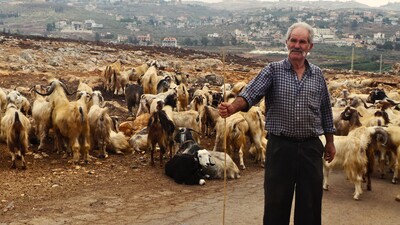
Pastoral systems operate across landscapes that are often described as marginal, supporting livelihoods that are frequently framed as vulnerable. But the scale tells a different story; rangelands cover more than half of the Earth’s land surface, sustaining 2 billion people, including around 500 million pastoralists. In many dryland economies, livestock production contributes 15 to 40 percent of agricultural gross domestic product (GDP).
What makes pastoral systems difficult to measure is also what makes them effective. They are mobile, adaptive, and responsive to variability, with production shifting alongside rainfall, herds moving with grazing availability, and markets often remaining informal and embedded in local relationships rather than fixed infrastructure.
But these same characteristics sit uneasily within conventional economic frameworks; what cannot be easily measured is often underestimated, and what is underestimated is rarely prioritized.
Over time, this has consequences. Across rangelands, degradation is accelerating. Globally, around half of these landscapes are now degraded, placing up to $300 billion in ecosystem services at risk each year. As pasture quality declines, livestock productivity follows. Water becomes less reliable, and livelihoods grow more precarious, not because pastoral systems are inherently unproductive, but because the resources they depend on are under increasing strain.
In some contexts, the scale of these losses is stark. An ICARDA-led analysis shows that in Uzbekistan, land degradation is associated with the loss of millions of tons of food and forage annually, as well as 18.2 billion cubic meters of water and 194 million tons of soil. The economic cost exceeds $11 billion annually, nearly 18 percent of the national GDP.
These figures reveal that what appears to be environmental decline is, in fact, an economic issue, one that is often insufficiently recognized.
Yet, investment in these systems remains limited. Despite their scale, less than 5 percent of climate finance is directed toward rangelands. Value chains remain fragmented, infrastructure is sparse, and private sector engagement is still emerging. The result is a system that continues to function, but without the support required to reach its full potential.
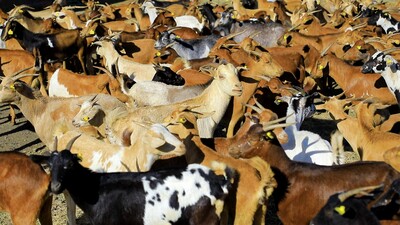
Efforts to strengthen livestock value chains, through improved collection systems, processing, and market access, have demonstrated measurable gains. In camel systems, for example, such investments have been associated with productivity increases of up to 30 percent, alongside new opportunities linked to carbon markets and sustainable land management.
On a broader scale, investing in land restoration is not simply viable; it is economically compelling. Evidence shows that targeted investments can generate returns many times their initial cost, with benefit-cost ratios exceeding 16:1 in some cases. These improvements point to a system that is already productive, but not yet fully enabled.
This raises a different way of understanding pastoralism. Rather than viewing it primarily as a livelihood requiring support, it can be seen as an economic system that produces value, sustains markets, and responds dynamically to environmental variability. From this perspective, the challenge is not to introduce productivity where none exists, but to recognize, structure, and invest in what is already there.
Because land is rarely restored in isolation. It is restored when the systems that depend on it are viable. Pastoral systems have evolved to function under conditions of uncertainty. In doing so, they offer a model of adaptability that is increasingly relevant in a changing climate. Yet their contribution remains only partially captured and therefore underleveraged, because knowledge gaps are generally larger than the available data in these pastoral systems.
Recognizing pastoralism as an economic system is not a matter of terminology. It is a shift in perspective, one that aligns policy, investment, and practices more closely with the realities of dryland economies, a space where pastoralists constitute a significant part of dryland’s inhabitants and, despite many efforts to change it, pastoralism persists.
Further Reading:
Contributing Researchers:
Dr. Boubaker Dhehibi, Principal Natural Resources Economist, ICARDA
Dr. Yigezu Atnafe Yigezu, Principal Agricultural Economist, ICARDA