Unlocking the Genetic Potential of Sheep and Goats for Low-Methane Emission and High Productivity

ICARDA and its partners in Tunisia and Ethiopia launched a new project, “Low-methane genetics expansion to small ruminants in Africa and Asia,” funded by and facilitated through the Global Methane Hub. The project aims to accelerate genetic progress toward low-methane-emitting sheep and goats in low- and middle-income countries (LMICs).
Small ruminants account for 55% of the world’s domestic ruminant livestock and contribute approximately 9.6% of total global livestock methane emissions. The majority of small ruminants are kept by smallholder farmers and pastoralists in LMICs across Africa, Asia, and Latin America, where targeted genetic strategies can reduce emissions while improving productivity, incomes, and resilience.
This project seeks to demonstrate that permanent, cumulative methane mitigation can be achieved through genetics by integrating individual-animal methane data into ongoing breeding programs without compromising animal performance or farmer livelihoods.
While selection for low methane has already been incorporated into cattle and sheep breeding goals in the Global North, experience in small ruminants within LMICS remains limited. This 3-year project addresses this gap by embedding methane recording directly into existing Community-Based Breeding Programs (CBBPs) for sheep and goats in Ethiopia, Tunisia, India, and Mongolia.
CBBPs have proven highly effective platforms for recording performance and genetic improvement in smallholder systems. Building on this success, the project pioneers integrating methane emissions as a selection trait alongside productivity and adaptation traits in locally adapted indigenous breeds.
Scientific and Technical Innovation
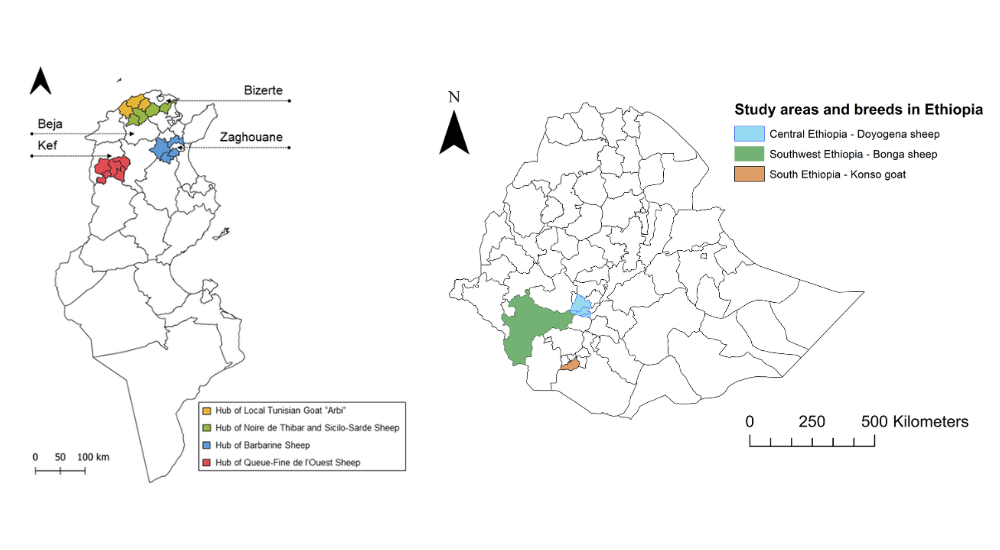
The project introduces reliable, internationally standardized methane measurement methods for sheep and goats, along with the infrastructure and analytical capacity required to generate robust emissions data at scale. Methane traits will be integrated into ongoing breeding schemes, ensuring that mitigation gains are cumulative and long-lasting.
Key scientific contributions include:
Establishing standardized methane phenotyping protocols for small ruminants
Developing customizable infrastructure for methane data capture and analysis
Building national capacity to integrate methane traits into breeding programs
Advancing breeding programs that combine low emissions, productivity gains, and local adaptation for long-term sustainability.
The work is organized into four interlinked work packages (WP):
WP1: Methane phenotyping, where methane emissions will be recorded from individual animals using the laser methane detector and portable accumulation chambers.
WP2: A data and information platform for methane recording events will be developed and integrated into the DTREO platform to facilitate the capture of methane emissions data for storage, analysis, and genetic evaluation.
WP3: Sampling and genotyping to determine the possible underlying genetic factors associated with methane emissions in sheep and goats and generate genotype data that can be used for genomic evaluation.
WP4: Technical support, training, and implementation for national partners to record methane emissions to ensure continued progression beyond the three-year project phase.
The project will work closely with the Global Methane Genetics Initiative, coordinated by Wageningen University and Research, to ensure standardization of protocols. Working with AbacusBio, the project will develop a DTREO plugin to capture methane emissions data and support ongoing evaluation and data integration.
Country Focus: Tunisia
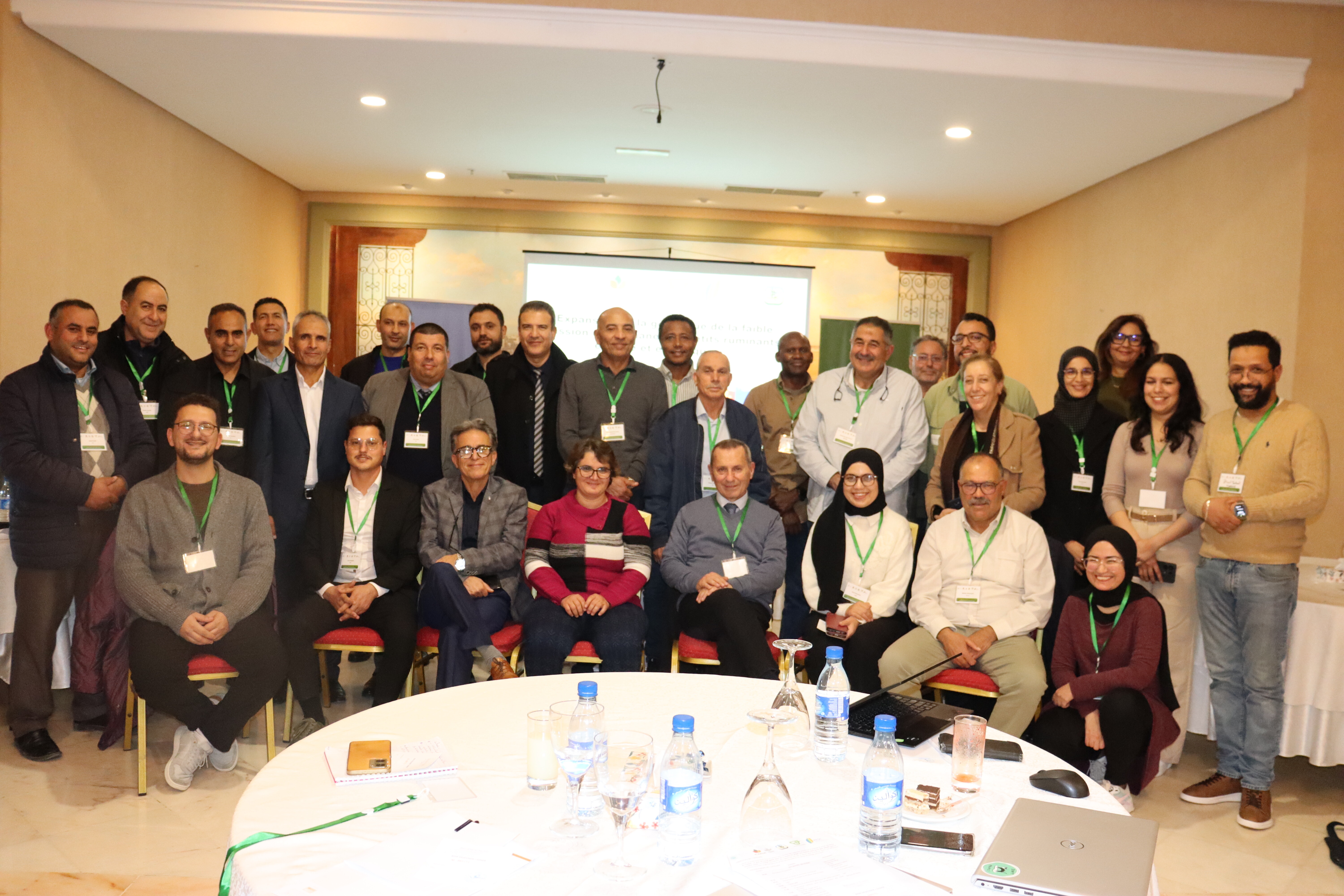
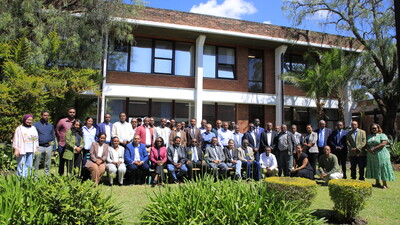
ICARDA and its national partners convened a project inception workshop in Tunisia on 18-19 December 2025. The project is implemented in partnership with the Office de l’Élevage et des Pâturages (OEP) under the Ministry of Agriculture, the official operator of all livestock breeding programs in the country and one of the oldest breeding institutions in the MENA region.
Tunisia is home to four sheep breeds and one genetically diverse goat breed. The goat breed is predominant in the mountainous northwest and the southern steppes. OEP manages the national animal identification system, performance recording, genetic evaluation, and selection, with increasing private-sector engagement.
Embedded within existing breeding programs, the project aims to cover all sheep breeds and goats nationwide, using a hub-based breed recording approach.
Country Focus: Ethiopia
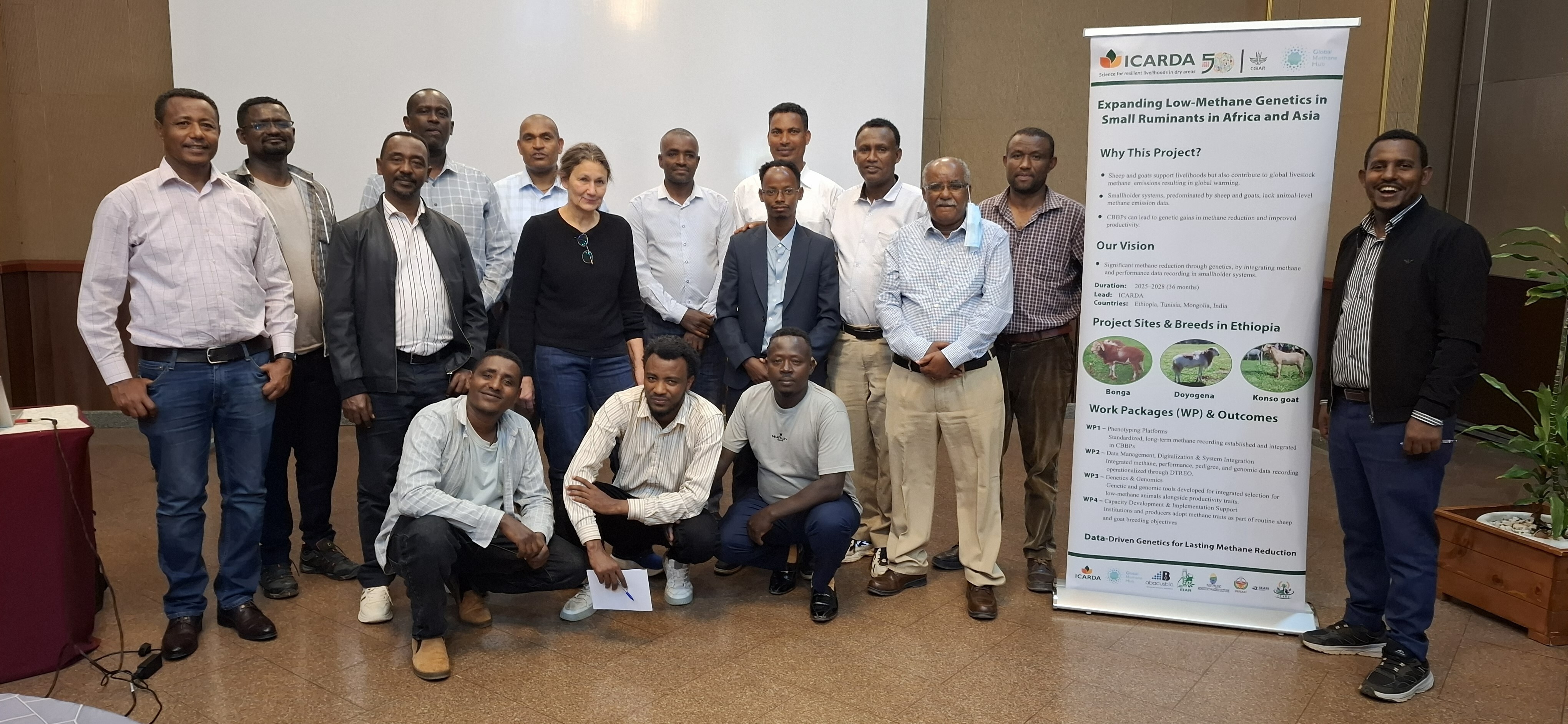
In Ethiopia, the project was launched through a national workshop on 15 January 2026. It builds on one of the largest and most mature CBBP networks globally, implemented in partnership with national and regional research institutes, the Livestock Development Institute (LDI), and the Ministry of Agriculture.
With more than 260 CBBPs across diverse agro-ecologies, Ethiopia offers a strong platform for performance recording, genetic evaluation, and dissemination under smallholder conditions. The initial phase focuses on two sheep breeds (Bonga and Doyogena) and one goat breed (Konso), all of which have robust pedigree and performance recording systems already in place.
Across both countries, universities, the national agricultural research system, and other development and private-sector actors are engaged as partners to support research, capacity development, innovation, and scaling.
According to Engineer Anis Zaiem, Director General of OEP, livestock genetic improvement is one of the cornerstones of Tunisia’s breeding strategy. He noted that integrating methane measurement into breeding programs will modernize ongoing efforts and align them with global climate-smart livestock initiatives.
During the launch in Ethiopia, Dr. Asrat Tera, Director General of the Livestock Development Institute (LDI), emphasized that integrating methane mitigation into genetic improvement is essential to delivering Ethiopia’s commitments under its Climate-Resilient Green Economy (CRGE) strategy and international climate frameworks.
Dr. Deribe, Livestock Research Director at CEARI, highlighted a shared vision for the project: a future in which low-emission, high-performing sheep and goats are fully integrated into national breeding programs, and where Ethiopia contributes data, knowledge, and leadership to global climate-smart livestock efforts.
Authored by ICARDA's Small Ruminants (SR) Research Team.