High-Level Visit Highlights Japan-Funded Solar Irrigation and Post-Harvest Innovations in Qena
High-Level Visit Highlights Japan-Funded Solar Irrigation and Post-Harvest Innovations in Qena
Date
February 09, 2026
Published by
ICARDA Communication Team
Category
News
Share
High-Level Visit Highlights Japan-Funded Solar Irrigation and Post-Harvest Innovations in Qena
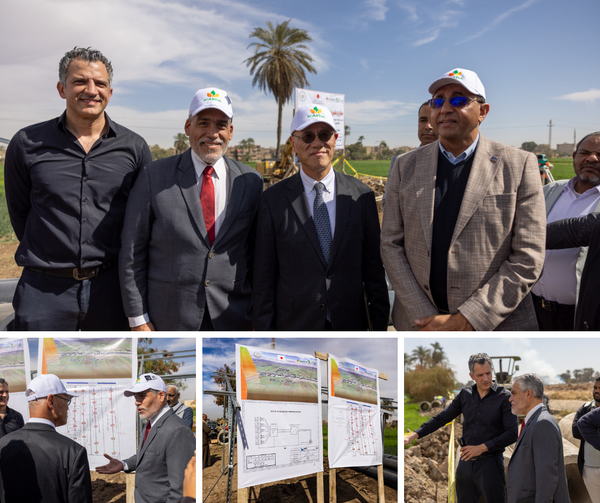
A high-level delegation visited Qena Governorate in Egypt on 1st February to review progress under the Reversing Egypt’s Diminishing Food Security project, funded by the Government of Japan and implemented in partnership with Egypt’s Ministry of Water Resources and Irrigation (MWRI). The visit showcased solar-powered irrigation systems and small-scale post-harvest processing units designed to improve water-use efficiency, reduce energy costs, and strengthen rural livelihoods in Upper Egypt.
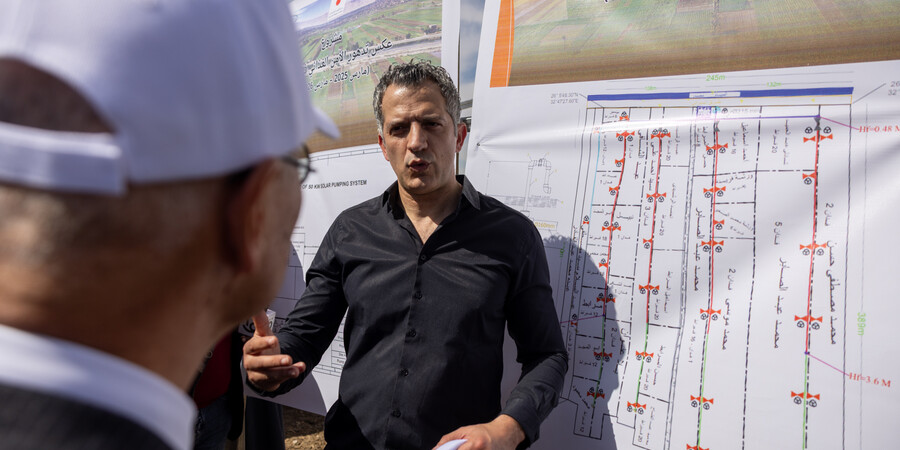
The field visit focused on ICARDA–MWRI Water Users’ Association sites at the mesqa (tertiary canal) level, where renewable energy solutions are being integrated into irrigation infrastructure and community-based post-harvest units support local agricultural value chains.
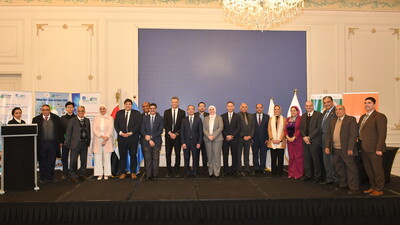
The delegation was received by Dr. Khaled Abdelhalim, Governor of Qena, and included H.E. Fumio Iwai, Ambassador of Japan to Egypt, Dr. Augusto Becerra, Deputy Director General – Research at ICARDA, and representatives from MWRI and national partner institutions. The visit began with direct engagement with farmers from Qena Governorate, placing local communities at the center of the project’s interventions.
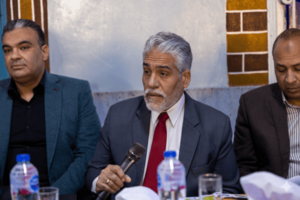
In his welcome remarks, Dr. Khaled Abdelhalim highlighted the project’s alignment with national priorities:
Dr. Khaled Abdelhalim, Governor of Qena
“Today, we are witnessing a very promising project that responds directly to Egypt’s priorities by rationalizing the use of both water and energy. By linking the waterfood, and energy nexus in agriculture, the project helps address climate challenges while supporting sustainability and food security over time. In Qena, where around 80% of the population depends on agriculture, the long-standing support from Japan and the science-based work led by ICARDA are making a real and visible impact. We are eager to scale ICARDA’s solar-powered improved irrigation system from 28 feddan in Qena governorate in the current project to 28,000 feddan in the coming few years.”
The project introduces solar-powered irrigation systems serving up to 67 feddans across Qena and Minya governorates, reducing dependence on conventional fuels and improving water-use efficiency and crop productivity. By integrating renewable energy with improved water management, the intervention addresses both climate adaptation and mitigation challenges in water-scarce environments.
H.E. Fumio Iwai emphasized the development impact of Japan’s support:
H.E. Fumio Iwai, Ambassador of Japan to Egypt
“Guided by Japan’s long-standing commitment to global food security and the principle of leaving no one behind, this project was made possible through a USD 750,000 grant from the Government of Japan. It focuses on promoting sustainable solutions, improving irrigation systems, and increasing farmers’ incomes through vegetable production and related agricultural practices. Importantly, the project also marks a significant milestone in cooperation between ICARDA and Japan, not only in Egypt but beyond.”
In his remarks, Dr. Augusto Becerra underscored the role of science and partnership in delivering impact:
Dr. Augusto Becerra, Deputy Director General – Research ICARDA
“This project shows how science, when combined with strong partnerships between national authorities, research institutions, and local communities, can deliver real impact on the ground. By improving irrigation systems, strengthening institutional capacity, and supporting farmers with practical, science-based solutions, we are responding to Egypt’s national priorities and contributing to more sustainable and resilient agricultural systems for the long term.”
Dr. Mohie Omar, Research Associate and Egypt Country Coordinator at ICARDA
Dr. Mohie Omar, Research Associate and Egypt Country Coordinator at ICARDA, outlined key project activities, including renewable energy generation and water rationalization, established water users’ associations, integrated networks of field ditches and drainage for efficient soil salinity leaching, post-harvest units, agricultural advisory services for market-oriented crops, and capacity building. The project has trained 150 agricultural extension officers and irrigation engineers from the Ministry of Agriculture and Land Reclamation (MALR ) and MWRI, as well as 140 farmers.
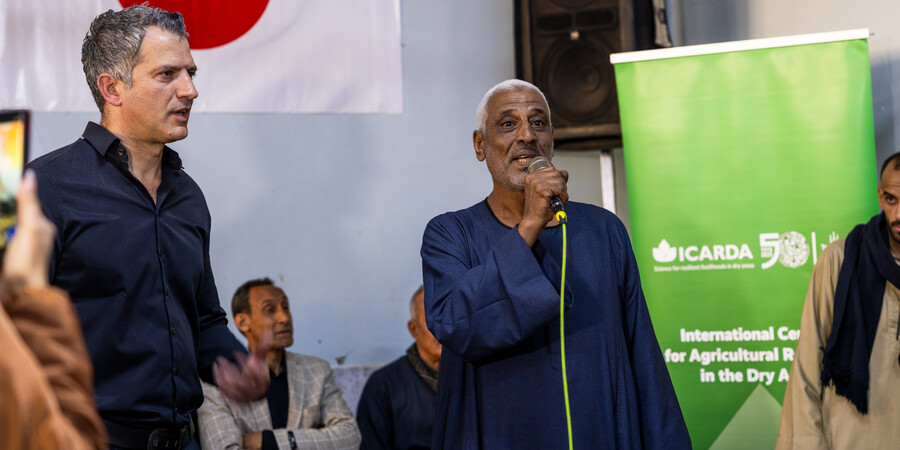
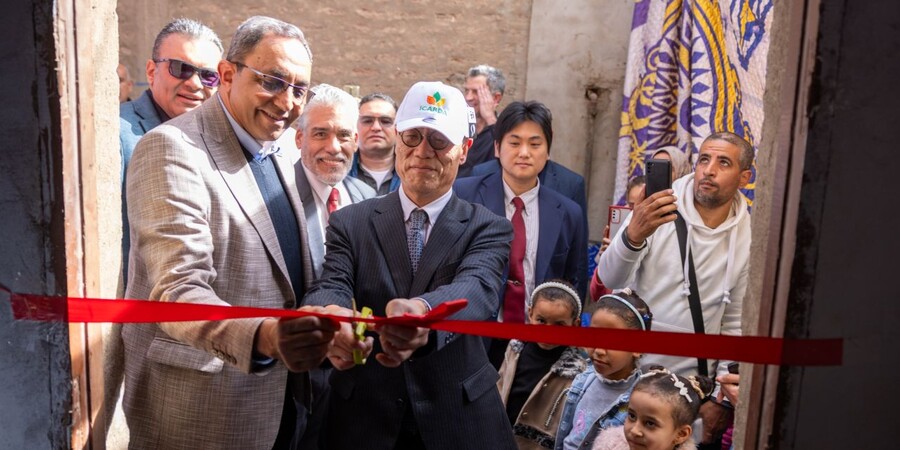
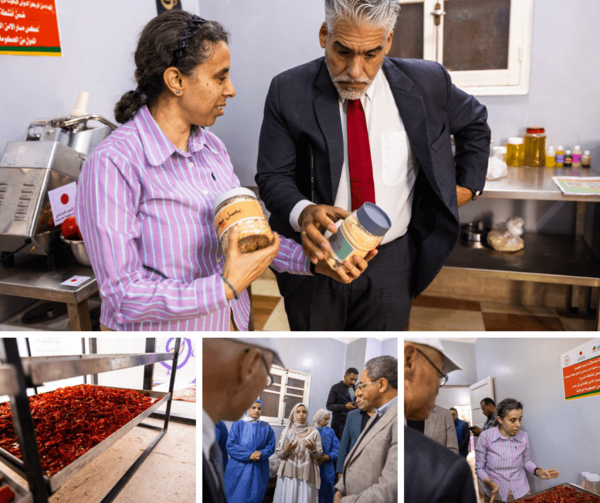
Dr. Khaled Abdelhalim, Governor of Qena, and H.E. Fumio Iwai, Ambassador of Japan to Egypt, during a visit to post-harvest processing units in Alashraf village, Qena.
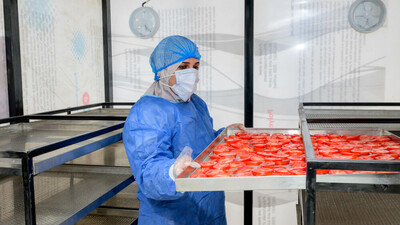
The visit concluded in Al Ashraf Village with a small community ceremony, where the delegation engaged directly with farmers and local residents. Hosted by a local NGO, the ceremony marked the installation of post-harvest processing units to reduce losses, improve product quality, and expand income opportunities, particularly for women in agricultural value chains.
The Qena visit reflects the close collaboration between Japan, Egypt, ICARDA, and national partners, demonstrating how science-driven innovation translates into tangible benefits for farmers and local communities while supporting food security and resilient livelihoods across Egypt and beyond.
Discover how women in Egypt are improving livelihoods and water productivity through solar drying and post-harvest innovation, reducing food loss and strengthening climate resilience.
This article explores how water innovation partnerships in Egypt are accelerating the transition from research to scalable, real-world solutions through strengthened collaboration, financing mechanisms, and institutional reform.
World Soil Day is a reminder that soil is the foundation of life, yet it faces mounting pressures from climate change, degradation, and unsustainable farming. In dryland regions, where erratic rainfall and drought threaten livelihoods, conservation agriculture (CA) offers a proven pathway to restore soil health, stabilize yields, and enhance climate resilience.