A Dryland Soil Solution for an Uncertain Climate

Scientific Blog
World Soil Day is a reminder that soil is the foundation of life, yet it faces mounting pressures from climate change, degradation, and unsustainable farming. In dryland regions, where erratic rainfall and drought threaten livelihoods, conservation agriculture (CA) offers a proven pathway to restore soil health, stabilize yields, and enhance climate resilience.
ICARDA promotes conservation agriculture across the CWANA region, including Algeria, Egypt, Iraq, Jordan, Lebanon, Morocco, Syria, Tunisia, and Uzbekistan, to strengthen resilience in dryland farming systems. By advancing practices that improve soil health, optimize water use, and reduce production risks, ICARDA supports farmers, researchers, and policymakers in building sustainable agricultural systems. These efforts aim to balance productivity with long-term resource conservation, ensuring food security under changing climate conditions.
Why Dryland Soils Need Conservation Agriculture Now
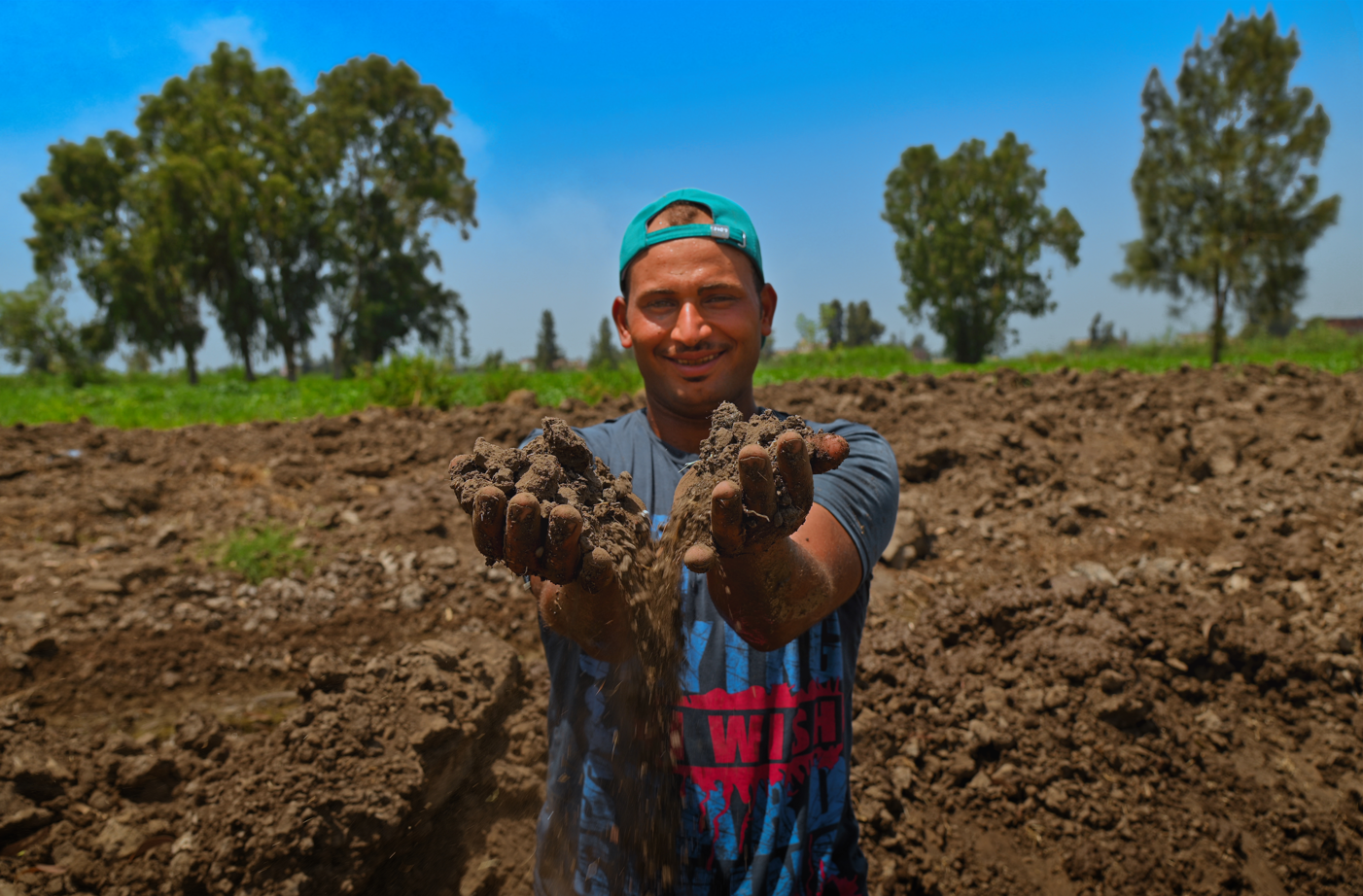
Dryland soils are inherently low in organic matter, highly susceptible to erosion, and heavily dependent on limited rainfall. When climate extremes intensify, these vulnerabilities stack up:
Heavy tillage accelerates soil degradation and strips away remaining moisture.
Residue removal and intensive grazing common in crop–livestock systems, weaken soil structure and increase evaporation.
Continuous cereal cultivation drains fertility and deepens risk in dry years.
CA directly addresses these challenges through minimal or no tillage, permanent soil cover, and crop diversification. Together, these practices:
Improve organic matter levels
Strengthen soil aggregates and infiltration
Reduce evaporation losses
Buffer against rainfall variability
Stabilize yields in both drought and normal seasons
Across CWANA, this makes CA not just a climate-smart strategy but also a risk management tool for farmers who now face increasing uncertainty each season. However, no two dryland contexts are the same, and Morocco offers a particularly vivid look at both the complexity and the promise of scaling conservation agriculture.
Morocco’s Journey Toward Scaling Conservation Agriculture
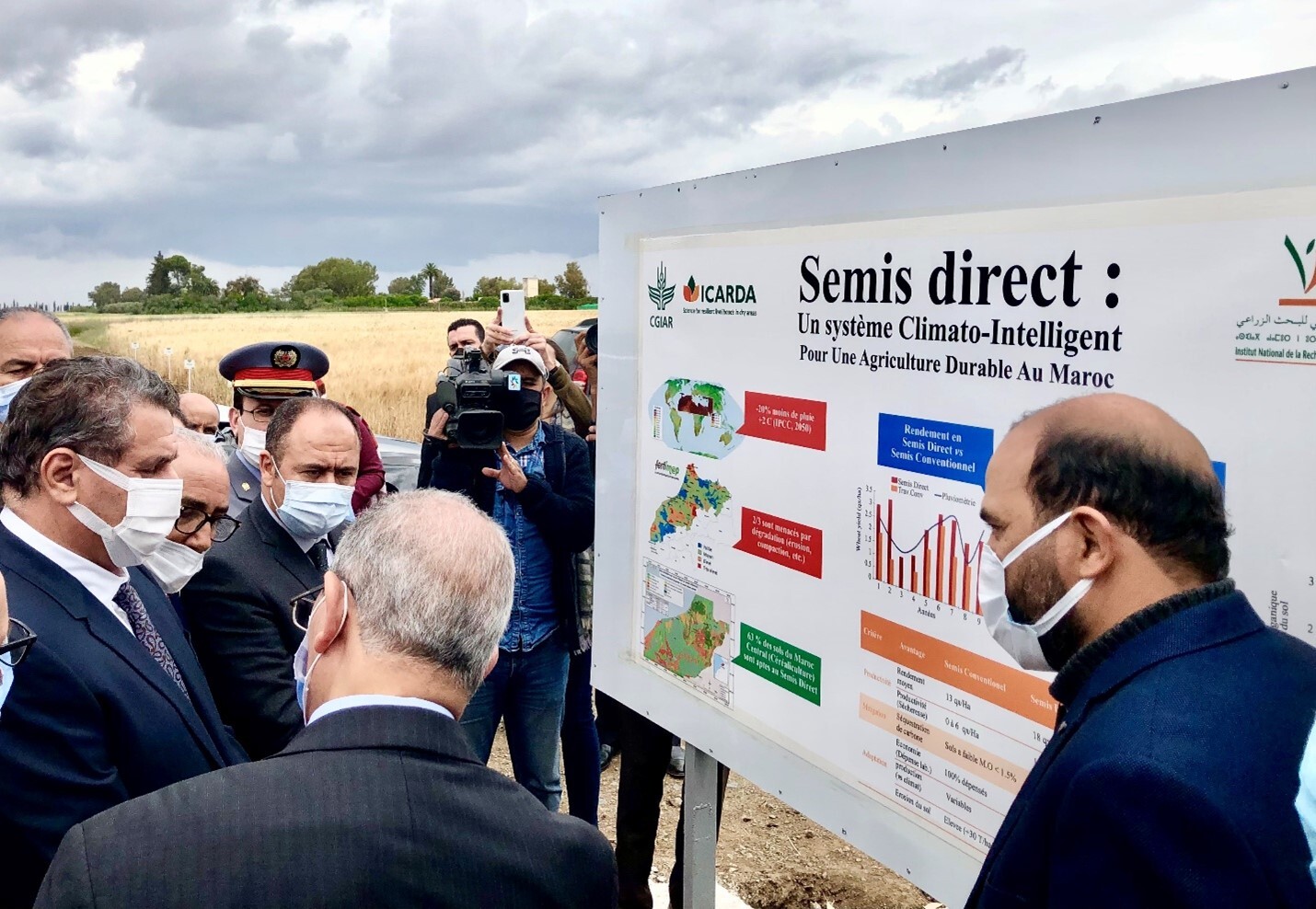
Moroccan farmers are facing an unprecedented climate and water crisis that threatens the sustainability of their livelihoods across large parts of the country. Recent data shows that Morocco’s agricultural sector continues to face significant challenges due to recurrent drought. The impact on cereal production has been particularly severe: recent reports indicate that wheat and barley yields fell by 45–52% in the 2024/25 season due to drought stress. The World Bank noted last year that Morocco’s agricultural sector shrank by 17% due to this severe and prolonged drought. To strengthen climate and water resilience in agriculture, Morocco aims to cultivate more than one million hectares of cereals under CA by 2030.
Experiences across drought-prone agroecosystems consistently demonstrate that CA enhances productivity, soil function, and climate resilience by conserving soil moisture compared to conventional tillage. In Morocco’s cereal-based drylands, CA wheat yields have doubled, and occasionally quadrupled, compared with conventional systems. These findings are strongly supported by long-term CA trials managed by our researchers in collaboration with INRA, our national partner, in which sustained improvements in yield stability, soil organic matter, and water-use efficiency under no-till have been documented over decades. More recent collaborative work, combining field experiments, soil monitoring, and modeling, has further demonstrated that CA systems enhance soil structure, reduce erosion, and increase soil carbon sequestration in Morocco’s semi-arid and arid lands.
Global evidence reflects Morocco’s experience: in dry regions, CA improves both soil carbon storage and crop yields. A review of 610 studies from 63 countries shows that CA outperforms conventional farming in water-scarce areas, especially when all three principles (no-till, residue retention, and crop rotation) are used together. Yield gaps mostly occur when CA is applied only partially. Where the full package is adopted, results from over 4,400 yield comparisons show no losses, and in dry climates, yields can increase up to four times.
Advances in agronomy, crop diversification, and variety selection further boost CA performance. Research in Morocco shows that optimizing nitrogen management and adopting high-efficiency varieties improves water and nutrient use while reducing environmental impacts. Diversified rotations and mixture-based cropping enhance soil organic matter, water retention, and yield stability under no-till. A survey across 21 major wheat-growing provinces found that no-tillage is a key factor determining yields in rainfed drylands.
Direct seeding into untilled soil needs no-till seeders, which are expensive and out of reach for farmers. ICARDA, in collaboration with partners, has supported the development of a locally manufactured no-till seeder in Morocco and its business model, and also customized and imported a low-cost multi-crop seeder to expand access and accelerate CA adoption in Morocco.
Major CA projects and initiatives implemented in Morocco
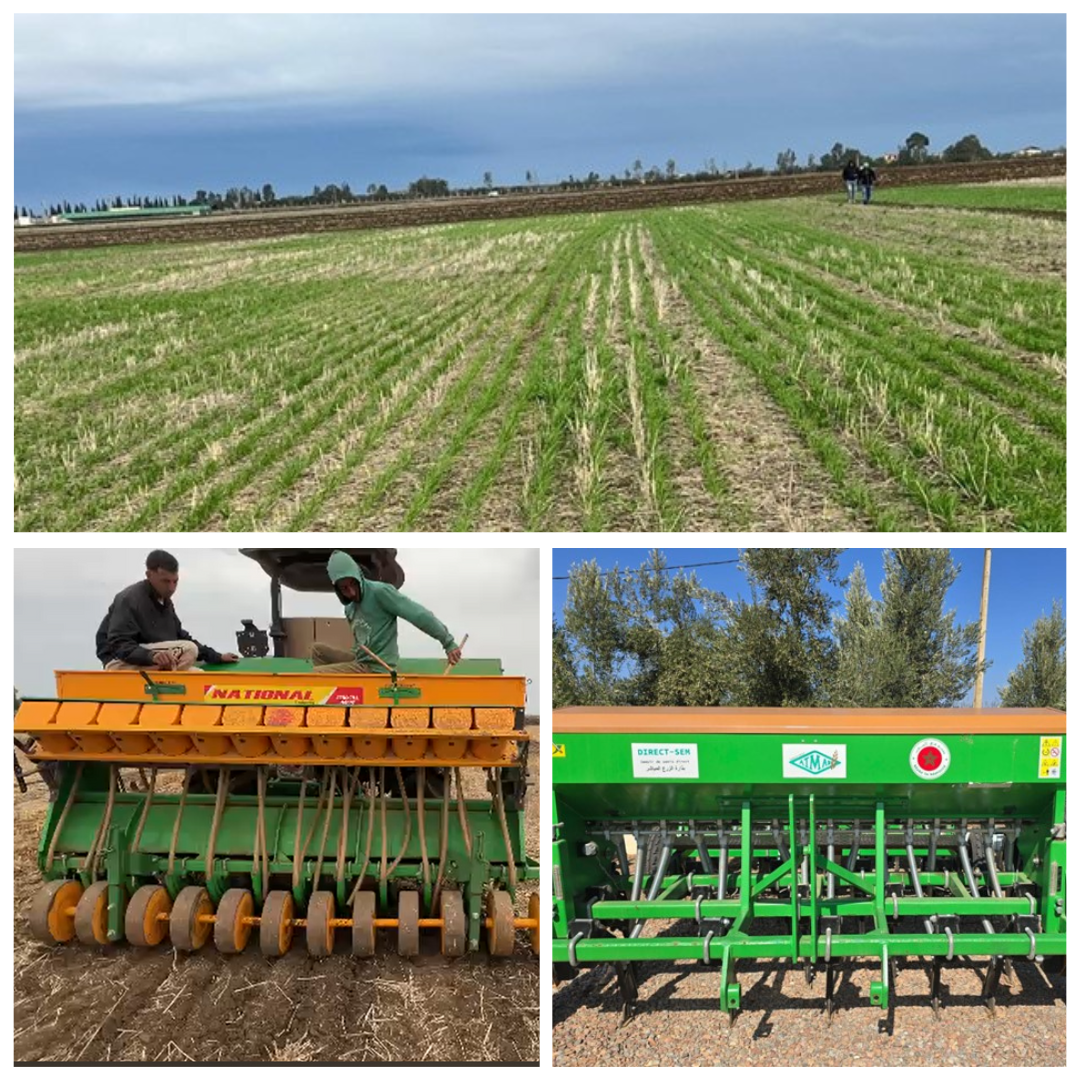
Over the past two decades, ICARDA and its partners have advanced CA in Morocco and the wider CWANA region through a series of flagship projects. The CANA project (2012–2015) focused on overcoming machinery barriers by developing an affordable, locally manufactured no-till seeder and business model to expand farmer access. The CGIAR Research Program (CRP) on Wheat (2012–2016) evaluated elite genotypes under CA and conventional systems, highlighting the importance of drought-tolerant, high-yielding cultivars and the need for stepwise adoption supported by strong policies and institutions.
Long-term trials under the MCGP Program (2004–2024) institutionalized CA research across Morocco, generating location-specific evidence on soils, water, and crops, while documenting adoption challenges, including costly machinery, residue competition, and crop–livestock integration needs. More recently, the CGIAR Excellence in Agronomy Initiative (2021–2024) has co-created data-driven CA solutions with farmers and national partners, combining long-term trials, on-farm testing, and digital tools like a national CA dashboard to improve yield stability, soil health, and water-use efficiency, while promoting inclusive scaling pathways for women, youth, and service providers.
Complementing these efforts, the CGIAR CWANA Regional Initiative (2022–2024) has mobilized evidence and multi-stakeholder platforms to raise national awareness, while the World Bank partnership (ongoing) positioned CA as a climate-resilient solution and entry point for carbon farming, supporting Morocco’s goal of scaling CA to one million hectares by 2030. The PRIMA-CAMA Project (2019–2024) has identified adoption barriers in Mediterranean drylands, tested tailored practices, and demonstrated benefits for soil fertility and erosion control through participatory trials. In parallel, the CGIAR Sustainable Farming Science Program explores CA’s role in boosting productivity under climate stress and scaling equitably across diverse systems. At the same time, the CGIAR Scaling for Impact (S4I) Program strengthens partnerships, digital monitoring tools, and farmer-centered innovation platforms to accelerate adoption and embed CA as a high-impact solution across Morocco and the wider region.
Million Hectare Question - Why Isn’t CA Scaling Faster?
Machinery Access and Service Provision
No-till seeding is the entry point to CA, but affordable machinery and easy access to no-till seeder service remain scarce. Constraints include limited manufacturers or dealers, a lack of spare parts, poor calibration support, and weak contractor networks. Small-scale, low-cost no-till seeders and their service provision, highlighted as a priority by various programs, including the 8th Africa Conservation Agriculture Conference, are essential for smallholders.
CA Requires Context-Specific Bundled Agronomy, Not a Single Tool
No-till changes soil microclimates. To unlock benefits, farmers need a full package of calibrated no-till seeders, seed–fertilizer banding, starter phosphorus and potassium, split nitrogen aligned with rainfall, legumes for biological nitrogen fixation, residue and grazing rules, weed management adapted to residue systems, moisture-based “go/no-go” sowing decisions, simple local advisories via extension or contractors. This bundle improves establishment, boosts water-use efficiency, and stabilizes yields while lowering fuel costs and erosion. Still, most of the technological packages developed are for conventional tillage systems.
Crop Rotations
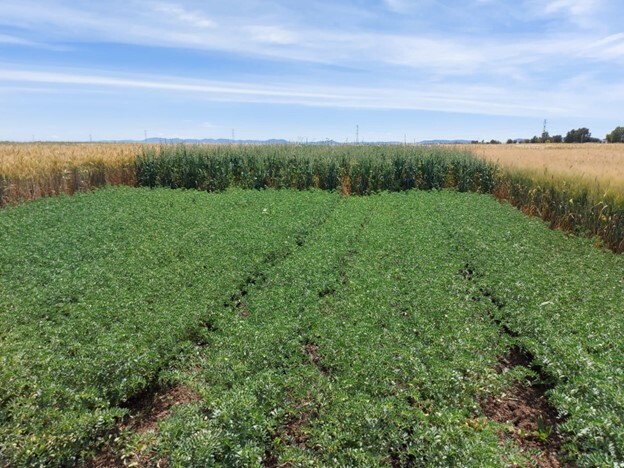
Crop rotation is one of the major components of CA. Legume-cereal rotations improve soil fertility, water-use efficiency, yield stability, and system productivity. Current incentives in many CWANA countries, however, subsidized cereal seed and government buyback guarantees push farmers toward cereal-cereal rotations. Scaling CA with legume in rotation requires better access to legume seeds and adapted varieties, clear management packages, buyback guarantees for legumes, support for forage markets and feed integration.
Residue Retention vs. Open Grazing
Free grazing undermines CA by removing soil cover, eroding fertility, and weakening moisture retention. Solutions include rotational or delayed grazing, increasing forage quality, e.g., through forage mixtures within rotations, improved feed storage and markets, and incentives for residue retention (including carbon payments).
Farmer Perceptions and Agronomic Confidence
Many farmers view tillage as essential for capturing moisture, improving crop establishment, or controlling weeds. Overcoming this requires participatory on-farm demonstrations, peer champions, transparent economics, stronger extension systems, and public-private partnerships around machinery and inputs. It is also important to build confidence in local researchers, extensionists, and service providers through capacity development and exposure visits.
Digital Tools for CA Advisory and Monitoring
Scaling CA requires real-time guidance and feedback. Morocco has begun developing digital systems, including the Zar3Direct platform, built by ICARDA–INRA, the Moroccan Association for Conservation Agriculture (AMAC), and private IT partner DeepFaces, to track adoption, soil-carbon gains, and yield performance, while offering localized recommendations.
Beyond Morocco: A Regional Pathway for Healthier Dryland Soils
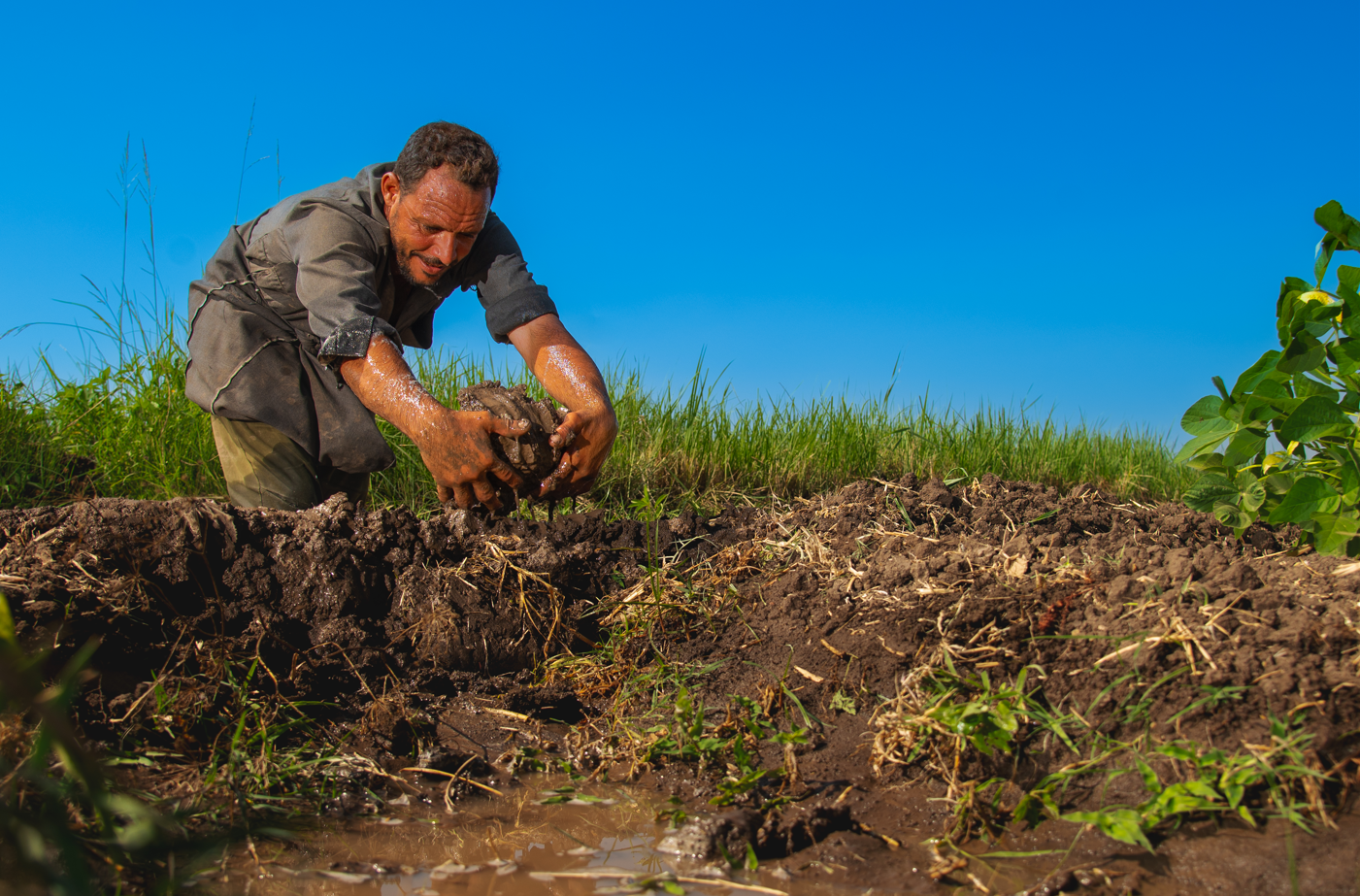
Morocco is a flagship case, but the lessons apply across CWANA’s drylands. Scaling CA requires:
Bundled agronomy for the CA-based system, not piecemeal adoption
easy access to a no-till seeder and other relevant machinery
Policies that reward soil stewardship, not just crop output
Stronger extension networks and farmer champions
Digital platforms that close the information gap
Private-sector engagement for service provision and inputs
Integrated crop–livestock solutions so residues can stay on the soil
Dryland soils across the region face the same pressures and respond positively when treated with care, cover, and reduced disturbance. Morocco’s journey offers hope and clarity for the wider region. CA is not a silver bullet, but it is one of the few strategies that simultaneously improves soil health, reduces climate risk, builds resilience, and supports livelihoods in drylands. Across CWANA, ICARDA and its partners continue to build evidence, strengthen capacity, develop digital tools, and work with farmers to transform CA from a promising approach into a widespread, high-impact solution.
Healthy soils are the first line of defense against climate uncertainty. Strengthening them today is the surest way to secure food systems for tomorrow.
Authors:
Dr. Mina Devkota, Senior Scientist - Dryland Agronomy, ICARDA
Dr. Rachid Moussadek, Systems Cropping Agronomist - ICARDA-INRA Joint Researcher
Dr. Vinay Nangia, Research Team Leader - Soil, Water, and Agronomy, ICARDA
Further Reading:
Rachid Moussadek, Mina Devkota Wasti, Vinay Nangia. (30/6/2021). Diagnosis of the current state of conservation agriculture in Morocco and economic review. https://hdl.handle.net/20.500.11766/66960
CGIAR Research Program on Wheat. 2021. Climate-smart Conservation Agriculture in MENA region drylands: Opportunities and challenges ahead. Reported in Wheat Annual Report 2021. MELIA. https://hdl.handle.net/10568/124278
Devkota, M., S.B Patil, Shiv Kumar, Zakaria Kehel, Jacques Wery. 2021. Performance of elite genotypes of barley, chickpea, lentil, and wheat under conservation agriculture in Mediterranean rainfed conditions. Experimental Agriculture (57), 126–143. doi:10.1017/S0014479721000107.
Devkota, M, K.P. Devkota, Shiv Kumar. 2022. Conservation agriculture improves agronomic, economic, and soil fertility indicators for a clay soil in a rainfed Mediterranean climate in Morocco. Agricultural Systems. https://doi.org/10.1016/j.agsy.2022.103470
Yigezu, A. Yigezu, T. El-Shater, M. Boughlala, M. Devkota, R. Mrabet, R. Moussadek. 2021. Can an incremental approach be a better option in the dissemination of conservation agriculture? Some socioeconomic justifications from the drylands of Morocco. Soil & Tillage Research 212 (2021) 105067. https://doi.org/10.1016/j.still.2021.105067
El-Shater, T., Mugera, A., Yigezu, Y.A., 2020. Implications of Adoption of Zero Tillage (ZT) on Productive Efficiency and Production Risk of Wheat Production. Sustainability 12, 3640.
Devkota, M., Yadvinder-Singh, Yigezu Atnafe Yigezu, Isam Bashour, Rachid Mussadek, Rachid Mrabet. 2021. Conservation agriculture in the drylands of the Middle East and North Africa (MENA) region: Past trend, current opportunities, challenges, and future outlook. Advances in Agronomy. Under publication process
Moussadek et al. 2014. Tillage System Affects Soil Organic Carbon Storage and Quality in Central Morocco. Applied and Environmental Soil Science. https://doi.org/10.1155/2014/654796
Moussadek, R., et al. (2021). Enhancing soil structure and productivity through conservation agriculture in semi-arid systems. Soil & Tillage Research, 208, 104885.
Moussadek , R., Laghrour , M., Kadiri, K., & Mrabet , R. (2024). Conservation agriculture in Morocco: review and analysis for the resilience of the cereal system on 1 million hectares by 2030. African and Mediterranean Agricultural Journal - Al Awamia, (143), 263–279. https://doi.org/10.34874/IMIST.PRSM/afrimed-i143.48378
Mrabet, Rachid, Rachid Moussadek, Mina Devkota, and Rattan Lal. 2021. No-Till Farming in the Maghreb Region: Enhancing Agricultural Productivity and Sequestrating Carbon in Soils. In: Soil Organic Matter and Feeding the Future, pp. 339-364. CRC Press. https://hdl.handle.net/20.500.11766/66465