ICARDA Champions Gender Responsive Agriculture at Masar Al’an
ICARDA Champions Gender Responsive Agriculture at Masar Al’an
Start Date
April 14, 2026
End Date
April 15, 2026
Type
Conference
Location
Córdoba, Spain
Share
A group photo with ICARDA representative Dina Najjar at Masar Al'an 2026 in Spain
14–15 April 2026 | Córdoba, Spain – ICARDA took part in the recent Masar Al’an (The Way Forward Now) event, organized by the Spanish Agency for International Development Cooperation (AECID), the European Institute of the Mediterranean (IEMed), and TRAGSA under the Masar Al’an program and in collaboration with Casa Árabe and Casa Mediterráneo. The event showcased research and field experience on gender equity in agriculture and rural development, bringing together practitioners and decision makers from across the Middle East and North Africa (MENA). Within this context, ICARDA shared evidence on how social and economic inequalities continue to influence agricultural outcomes.
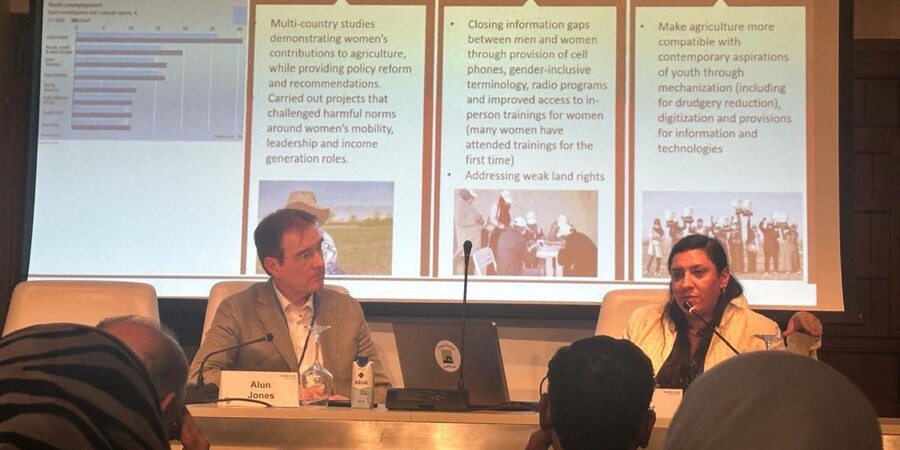
Dr. Dina Najjar, ICARDA Senior Gender Scientist, delivered a keynote highlighting how closing gender gaps can improve livelihoods and strengthen agricultural systems in dry and vulnerable areas. She explained that agroecological practices have been shown to enhance resilience, nutrition, and incomes across the MENA region, and that women are often more likely than men to adopt these practices – supported by an ICARDA study involving 923 farmers. However, Najjar noted that women frequently lack the authority to make farming decisions and that agroecological practices can also increase women’s workload if barriers are not addressed.
"In the MENA region, agroecological practices often increase women’s workload, making it essential to address time constraints, access to resources such as land and market, and decision‑making." – Dina Najjar, ICARDA Gender Senior Scientist
Dina Najjar while delivering a presentation on gender equity at Masar Al'an 2026
Drawing on ICARDA’s study “Even the Goats Can Feel the Heat,” Najjar highlighted that women’s contributions to livestock production and rangeland management are often overlooked in policies related to climate change.
Across many regions where ICARDA works, Najjar shared practical examples of how addressing gender barriers has led to improved outcomes. These include supporting 700 women farmers through mobile-phone based advisory services, radio programs for sharing agricultural knowledge, inclusive communication approaches, and expanded access to in-person training—often attended by women for the first time.
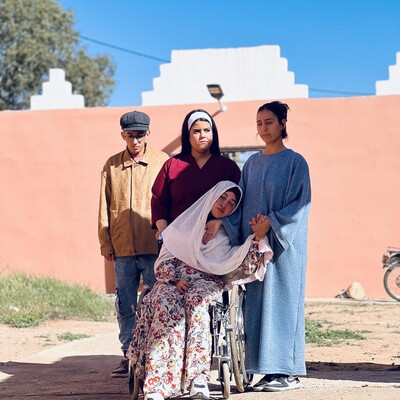
A photo of 4 community members engaged in the Forum Theatre in Morocco to address harmful gender norms
Dr. Najjar further stressed that strengthening women’s land rights is critical for economic empowerment and social justice. She noted that, despite legal reforms in many countries, women’s actual ownership and control over land remain limited due to entrenched social norms and inheritance practices. To address this gap, she highlighted the need for practical, actionable interventions, including community-based approaches such as Forum Theatre – where women use performance to challenge harmful gender norms, increased legal awareness around inheritance rights, and targeted support for women’s entrepreneurship linked to land access.
Najjar highlighted ICARDA’s efforts to support women’s cooperatives by facilitating food safety certification, providing labor-saving technologies, and offering leadership training. In addition, ICARDA develops policy briefs, organizes national workshops, and participates in media and policy discussions to strengthen awareness and influence.
Engaging young people, particularly young women, was another key focus. Najjar emphasized that agriculture must adapt to meet modern expectations. ICARDA works to make farming more attractive by reducing physical labor through mechanization, promoting digital tools, and improving access to agricultural information and technology.
“By modernizing agriculture, we help ensure it remains a viable and appealing option for the next generation.” – Najjar
ICARDA’s participation in the MasarAl’an event reaffirmed its commitment to inclusive agricultural development in the MENA region. Through evidence-based research and close collaboration with communities, ICARDA continues to promote approaches that support more equitable and sustainable food systems.