
Silvopastoral Systems Restoring Land and Livelihoods in Tunisia
Start Date
November 05, 2025
End Date
November 05, 2025
Type
General event
Location
Tunisia

Field Day in Tunisia
5 November, Tunisia, an open field day in Zaghouan brought together researchers, development partners, and local communities to explore how agroforestry and silvopastoral systems can support ecosystem restoration and strengthen rural livelihoods in Tunisia.
The event was organized by ICARDA in close collaboration with the General Directorate of Forestry (DGF), the Regional Commission for Agricultural Development (CRDA) in Zaghouan, the Department of Soil and Water Conservation (CES), the Rural Women’s Support Office (BAFR), the Regional Directorate of Forests, CAPTE Tunisie, and local GDAs from Oued Sbaihia and Chahda under the TRANSFORMED PRIMA project, and the CGIAR Multifunctional Landscapes Accelerator. Community members joined the activities, creating a strong platform for dialogue and hands-on learning.
Together, participants explored how silvopastoral and agroforestry practices can help restore degraded land, reduce erosion, improve soil structure, enhance water infiltration, and create new livelihood opportunities. These systems are increasingly important in dry regions where climate pressures are intensifying and land productivity is declining.
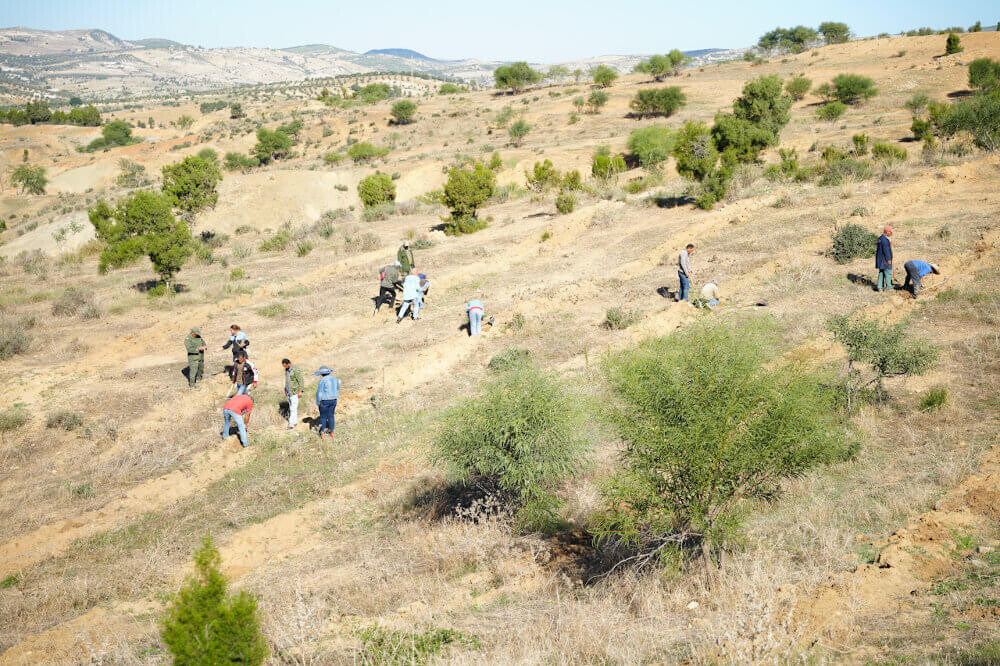
Experts from ICARDA, DGF, CAPTE, and CES led a training session that introduced participants to key agroforestry techniques. The session covered species selection, planting methods, soil and water conservation measures, and long-term maintenance practices. Special focus was placed on managing tree and shrub seedlings, including carob (Ceratonia siliqua), a species of substantial ecological and economic value in Tunisia.
Participants also explored how trees, shrubs, and forage species interact within silvopastoral systems. These interactions contribute to soil fertility, carbon storage, and biodiversity across rangeland and forest landscapes. CAPTE Tunisie highlighted the important role of carob trees in supporting local ecosystems and in generating rural income.
Field demonstrations provided participants with hands-on experience in seedling handling, soil preparation, water harvesting, and planting. These activities highlighted the practical steps needed to achieve long-term, sustainable and resilient restoration outcomes.
Ayda, a participant from Oued Sbaihia, shared her story:
“Any forest tree is a blessing for me. I already earn some income by buying carob fruits, processing them at home, and selling the products. Unfortunately, my own carob trees are not yet productive. I cannot wait until they start fruiting. They will further increase my income and help me better support my family.”
Her testimony shows how restoration directly improves community well-being. Each planted seedling carries a promise of resilience and a pathway toward better livelihoods.
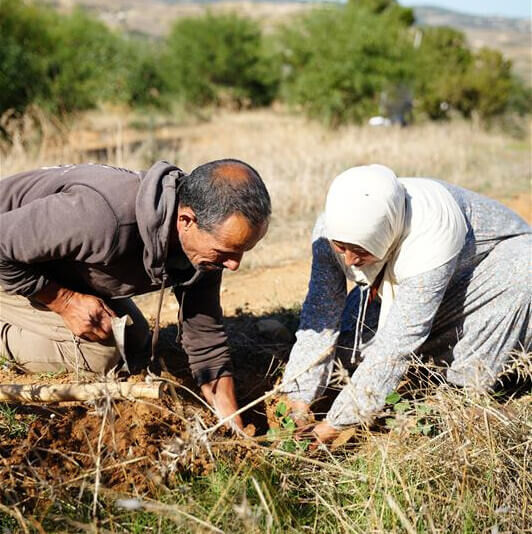
The field day ended with the joint planting and irrigation of more than 500 carob seedlings. This act reflected the commitment of all partners to revive degraded landscapes, support rural communities, and strengthen ecosystem health.
The field day also aligned with Tunisia’s National Tree Day and contributed to broader global initiatives under the UN Decade on Ecosystem Restoration and the International Year of Rangelands and Pastoralists 2026. These connections highlight how collaboration, community participation, and innovation are essential to building sustainable, productive ecosystems in Tunisia’s drylands.
Contributors:
Dr. Mounir Louhaichi ICARDA, Research Team Leader of Rangeland Ecology and Forages
Dr. Sawsan Hassan ICARDA, Associate Scientist - Forage Agronomist
Khalifa Jalleli DGF
Ezzedine Marzouki DGF
Wajdi Dhib CAPTE


