Wheat Seed Road Map: Building an Inclusive Seed Sector in Sudan
Start Date
December 16, 2025
End Date
December 16, 2025
Type
Meeting
Location
Sudan

A field day and harvest day of wheat in New Halfa, Kassala State in 2025
Sudan faces both challenges and opportunities in revitalizing its wheat sector. The Wheat Seed Road Map outlines a clear strategy to build an inclusive and resilient seed sector that supports national development.
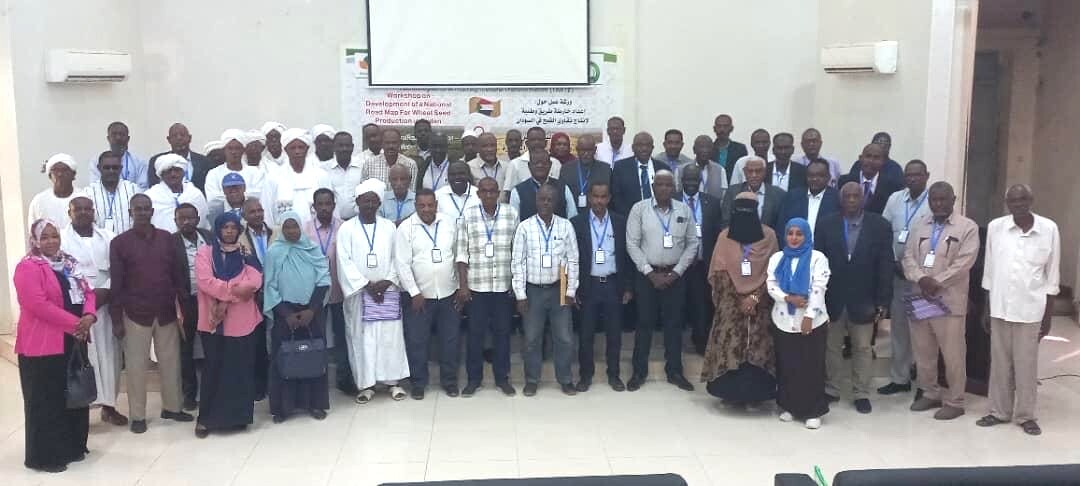
On 16 December 2025, a national workshop on developing the wheat seed roadmap was held in Wad Medani, Gezira State, Sudan, under the TAATII Wheat Project. Organized by ARC, the objectives of the workshop are to:
Assess the status of the wheat seed value chain amid the ongoing conflict.
Identify major constraints and opportunities for revamping and expanding seed production.
Develop a coordinated national road map for wheat seed production.
Strengthen collaboration among research institutions, government agencies, seed companies, and farmers to restore and improve the wheat seed sector.
The outcome of the workshop is to develop a comprehensive national road map for wheat seed production and investment plans. The consultation brought together participants from the wheat seed value chain in Sudan, including international organizations such as ICARDA, the Japan International Cooperation Agency (JICA), and the World Food Programme (WFP).
Previously, Sudan annually produced less than 5,000 tons of wheat seed and imported a large amount of wheat seed through direct government funding to boost its domestic wheat production. In 2022, with the continued support of Support to agricultural research for development of strategic crops in Africa (SARD-SC) and Technologies for African Agricultural Transformation (TAAT) projects implemented by ICARDA, as well as government investments and incentives, the country engaged the private sector in producing surplus wheat seed for export markets. Likewise, Sudan not only produced surplus wheat seed but also cultivated 315,000 hectares of land, yielding 1.15 million tons of wheat grain, nearly meeting 50% of its wheat self-sufficiency. With twists of fate, all those gains were disrupted, the physical facilities were destroyed, and the human resources were displaced internally and externally.
In the 2024/25 crop season, through the support of TAATII Wheat Compact, ARC spearheaded the revival of the wheat sector, working from New Halfa (Kassala state) and Dongala (Northern State) and River Nile State, and managed to re-establish the innovation platforms, providing training-of-trainers workshops on Good Agricultural Practices (GAPs), and accelerated seed production, partnering with public and private seed companies and farmers. The Argin IP in New Halfa comprises 21,000 ha, whereas the Korba IP comprises 70,000 ha. Accordingly, about 20 tons of early generation seeds (EGS), 1325 tons of certified seed, and 323 tons of quality-declared seeds (QDS) were produced in collaboration with the SATREP Wheat Project and in partnership with public and private seed companies such as Arab Sudanese Seed Company, NileSun Seed Company, Mahgoub Sons Company, Harvest Seed Company, Amtaar Seed Company, Thimar Seed Company, Ihmaidi Seed Company, and Ghanim for Seed Production in Northern, River Nile, and Kassala States, where there is relative security.
The workshop on the wheat seed roadmap, organized in Wad Medani, in the backdrop of these achievements and at the heart of the Gezira Scheme, the country's breadbasket, is a symbol of revival. It once again brings hope and plants the seed of determination and resilience in the agricultural sector. His Excellency Mr. Ibrahim Mustafa, Governor of Gezira Scheme, opened the workshop in the presence of the Director of Korba Scheme in Northern State and several high-level dignitaries from the Ministry of Agriculture, ARC, Universities, and Director Generals of public and private seed Companies and other seed value chain actors demonstrating their commitments in designing, endorsing, and implementing the road map.
Over 50 participants representing a broad spectrum of wheat seed value chain actors from 21 institutions, including national agricultural research systems, development practitioners, and policy makers, attended the meeting and deliberated on the challenges, opportunities, and way forward.