ICARDA Organizes the Second Edition of Sustainability Days with FAO and INRA-Morocco
Start Date
December 18, 2025
End Date
December 19, 2025
Type
General event
Location
Rabat, Morocco

Sustainability Days 2025
18 – 19 December 2025 | Rabat, Morocco - In celebration of World Soil Day, ICARDA, in collaboration with the Food and Agriculture Organization (FAO), the National Institute of Agricultural Research (INRA), and other partners, organized the second edition of Sustainability Days, bringing together over 100 participants, including policymakers, researchers, civil society members, and students, to discuss practical solutions for strengthening agricultural resilience in Morocco.
Under the theme “Strengthening Agricultural Resilience in Morocco through Sustainable Soil and Water Management”, the two-day event featured a plenary session, training for young researchers, and focused knowledge-sharing discussions supporting Morocco’s agricultural sustainability agenda.
ICARDA, FAO, and INRA: Three voices for One Resilient Agricultural Future
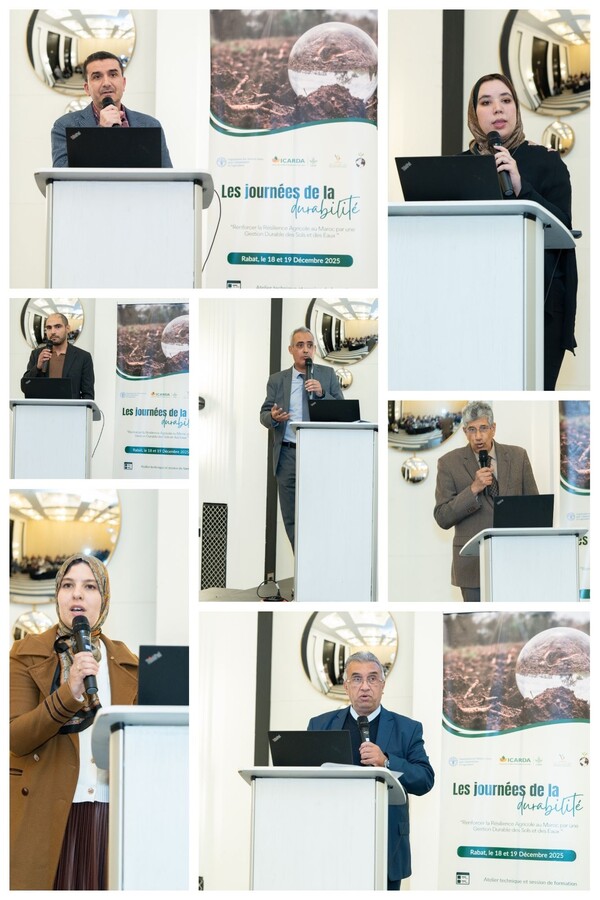
The event kicked off with opening remarks, followed by a plenary session featuring key presentations and discussions on sustainable agricultural solutions.
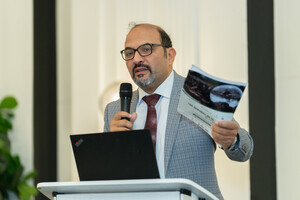
Dr. Rachid Moussadek, ICARDA-INRA Joint Senior Scientist, steered the plenary session by welcoming participants and highlighting integrated soil and water management as a cornerstone of climate-resilient agriculture. He also emphasized the importance of collaboration among stakeholders, setting the tone for a day of reflections, exchanges, and forward-looking dialogue.
Dr. Vinay Nangia, ICARDA’s Soil, Water, and Agronomy Research Team Leader, echoed this sentiment, highlighting the importance of partners speaking with one voice to support smallholder farmers and tackle the challenges ahead.
“The challenges are significant, but so is our determination to overcome them. ICARDA, FAO, INRA, and all partners remain committed to advancing resilient, sustainable agricultural systems for Morocco and its communities.”
He also called for a “brown revolution” to restore soil health and ecosystems after decades of intensive mechanization:
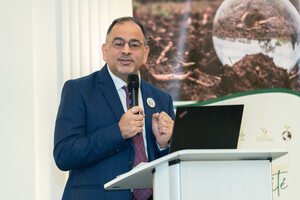
“Agriculture has already experienced two revolutions: mechanization, followed by the Green Revolution. The latter increased production, but at the cost of a series of degradations: declining groundwater levels, reduced soil fertility, and water pollution. Perhaps it is now time for a “Brown Revolution,” and we must define together what this means and send a strong message to the next generation of researchers.”
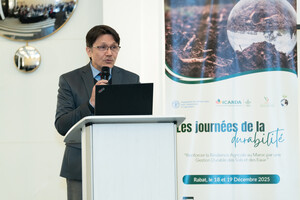
Alexandre Anh Tài Huynh, FAO Representative in Morocco, noted that science has already delivered strong solutions, but the challenge now lies in ownership and implementation. He highlighted FAO’s work on soil governance in Morocco, including the development of the National Soil Charter, and reaffirmed FAO’s commitment to supporting its adoption.
Moving from the institutional frameworks of soil governance to the evidence-based solutions, INRA’s Director General, Pr. Lamiae Ghaouti presented an overview of research and development initiatives aimed at strengthening agricultural resilience in Morocco.
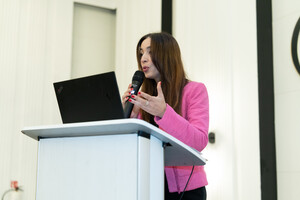
“We are working in a context of urgency, with climate challenges becoming more severe and unpredictable, pushing us to innovate faster and respond to immediate pressures. Drought is now a defining feature of our agricultural ecosystems, with structural rainfall deficits affecting wheat, olive, and livestock production and posing direct risks to food security and national supply,” she explained.
To address these challenges, Pr. Lamiae outlined a set of adaptation and mitigation strategies, including climate-resilient crops, sustainable soil and water management, conservation agriculture, improved irrigation efficiency, rainwater harvesting, and climate-adapted plant selection.
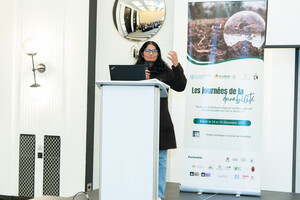
Following this strategic overview, the discussion shifted to data-driven agronomy and its role in sustainably intensifying dryland agriculture production, with Dr. Mina Devkota-Wasti, Senior Agronomist at ICARDA, highlighting the importance of leveraging data and analytics to optimize crop management, improve yields, and promote resource-efficient farming practices.
Dr. Moussadek further explored the role of agricultural soils in carbon sequestration, connecting soil health directly to climate mitigation efforts, a theme that resonated with broader discussions of regenerative practices.
Partners Driving Innovation in Soil and Water Management
The plenary session featured contributions from partner institutions, including the IAV Hassan II, whose representative presented a case study on dam siltation in Morocco and its implications of sedimentation for water storage, as well as novel tools and techniques for studying it. Dr. Youssef Brouziyne, Head of Regional Office for the Middle East and North Africa, the International Water Management Institute (IWMI), presented green water accounting for food security, highlighting innovative approaches to improve water-use efficiency, such as the CWA+ digital tool.
Ms. Wafae El Khoumsi from FAO discussed sludge management challenges and emerging opportunities, emphasizing the potential for circular and sustainable reuse pathways. The plenary session also featured a presentation by the African Plant Nutrition Institute (APNI), which showcased the 4R nutrient stewardship strategy. In addition, the Al Moutmir Initiative highlighted its efforts to promote direct seeding and other sustainable agricultural practices across Moroccan farming communities.
Training the Next Generation of Researchers
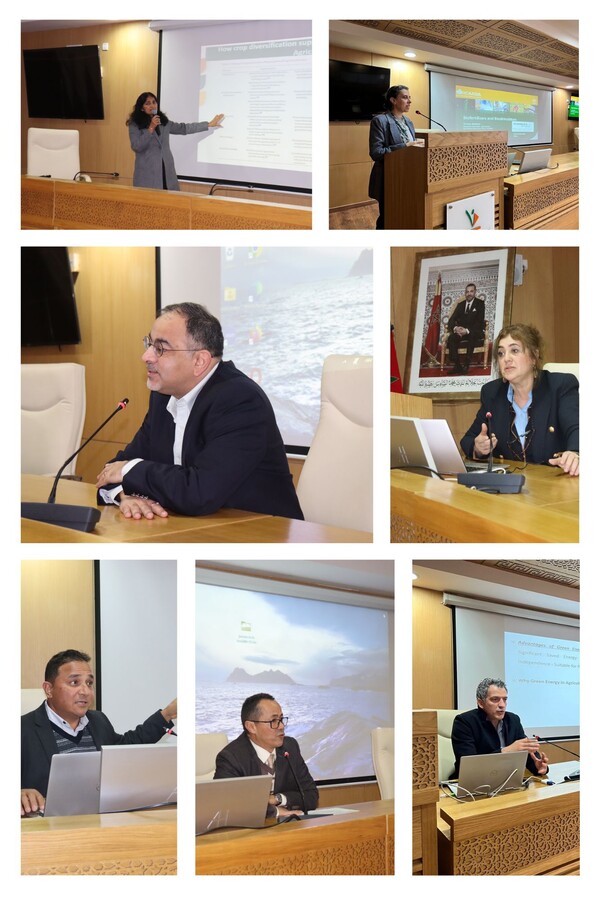
The second day focused on training in next-generation low-environmental-footprint cropping systems. Young researchers from ENFI, INRA, and IAV explored regenerative agriculture approaches, including biofertilizers, crop diversification, climate-smart soil and water practices, and the use of green energy in farming.

Dr. Mohie El Din Omar, Senior Researcher in Soil Water Agronomy and ICARDA Egypt Country Coordinator, discussed how green energy, particularly solar power, can drive transformation of the agrifood system, highlighting successful interventions, such as hybrid agrivoltaics, atmospheric water harvesting, solar desalination, and collective solar irrigation systems, that have already reduced costs by 25% in Minya and Qena, Egypt.
Dr. Samar Attaher, Research Associate, Agronomist, highlighted the role of biofertilizers and bio-stimulants in enhancing soil health and crop productivity while reducing environmental impact, underscoring their contribution to sustainable agricultural systems.
Dr. Mina Devkota presented innovative approaches to diversifying wheat-based systems in Morocco to improve sustainability, nutrition, and smallholder incomes. Dr. Krishna Devkota, Senior Scientist-Dryland Farming, shared a case study on ICARDA’s role in developing a master plan for Abu Dhabi using advanced cropping simulation models such as APSIM, AquaCrop, and DSSAT, highlighting the role of forgotten crops, precision nutrient management, and digital tools. Professor Hanae Nabil, École nationale forestière d'ingénieurs (ENFI), delivered a lecture to trainees on sustainable land management in forest areas. Dr. Michaela Brown, FAO, participated in the session and presented key findings from the FAO RecSoil project. Additionally, Dr. Abdelmjid Zouahri from INRA delivered an insightful presentation on the critical role of salinity management in achieving sustainable agricultural practices.
The second edition of Sustainability Days provided a dynamic platform to strengthen partnerships, share knowledge, and advance sustainable practices in Morocco’s agricultural sector. Discussions underscored both the urgency of climate challenges and the opportunities for innovation and collaboration, inspiring continued joint efforts and practical solutions for the future of Moroccan agriculture.
We extend our sincere gratitude to our partners, especially FAO and INRA, for their unwavering support. Looking ahead, we aim to establish Sustainability Days as a flagship annual event, enabling partners to review achievements, share lessons learned, address emerging challenges, and unite in delivering a collective message to Morocco’s smallholder farmers, whom we all serve in our respective capacities.


