FAO Global Conference on Sustainable Livestock Transformation
Start Date
September 29, 2025
End Date
October 01, 2025
Type
Conference
Location
Rome, Italy

Sustainable Livestock Transformation
The second Global Conference on Sustainable Livestock Transformation took place in Rome from 29 September to 1 October 2025. The event brought together FAO Members, policymakers, farmers, private companies and industry associations, civil society representatives, NGOs, researchers, and development agencies to share experiences and showcase actionable solutions for the sustainable transformation of the livestock sector. It aimed to foster change, scale innovations, and drive practical solutions.
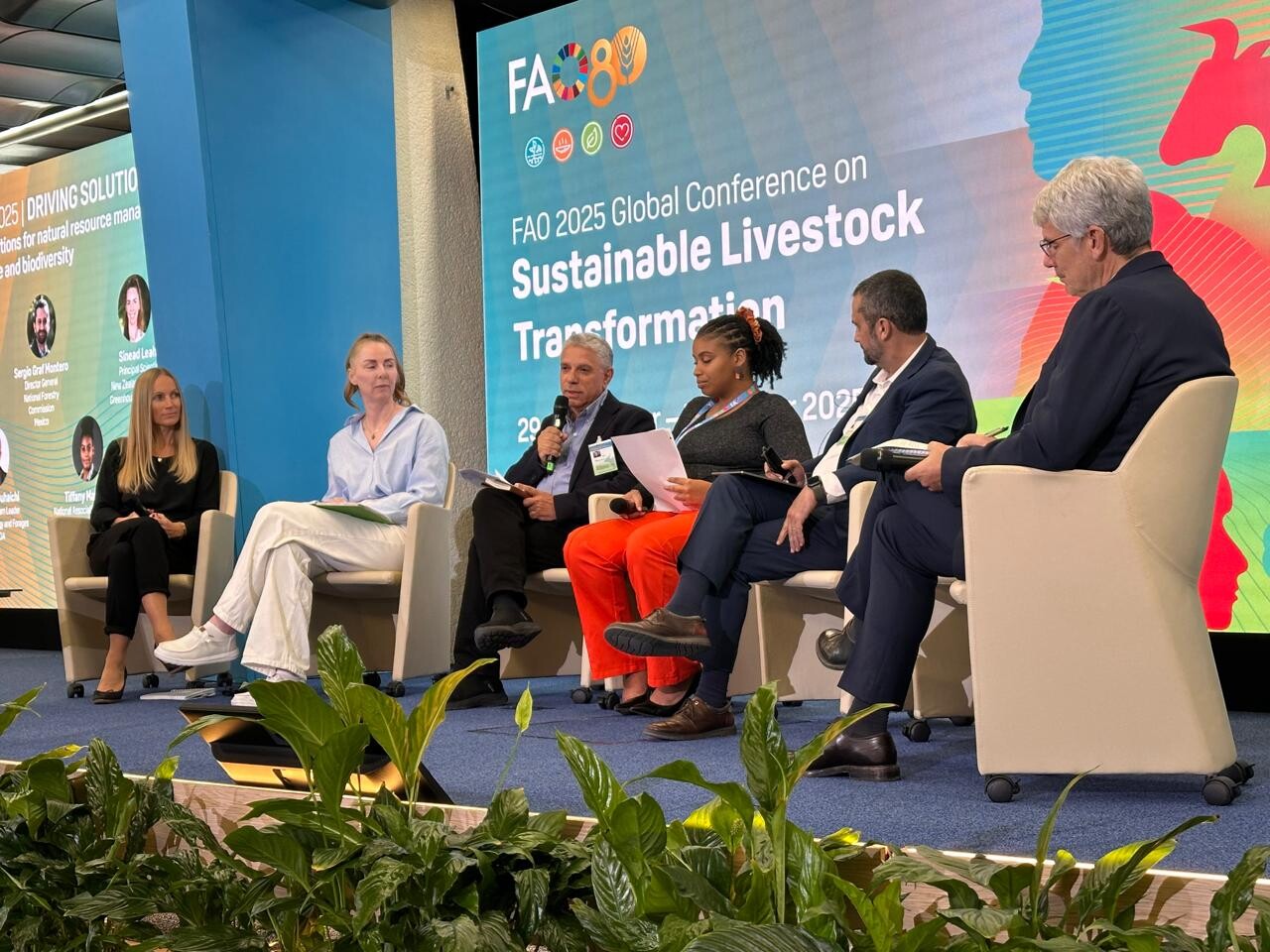
Dr. Mounir Louhaichi, Research Team Leader of Rangeland Ecology and Forages at ICARDA, participated as a panelist in the session on delivering solutions to livestock sector challenges.
During his intervention, he emphasized:
- The importance of the upcoming International Year of Rangelands and Pastoralists 2026
- Major threats to rangelands, with rangeland conversion as the top concern
- Effective livestock practices for biodiversity and ecosystem health, highlighting regenerative grazing
He also stressed the need for sustainable natural resource management, climate action, and biodiversity conservation to shape the future of livestock systems.
For more information and to follow the livestream CLICK HERE


